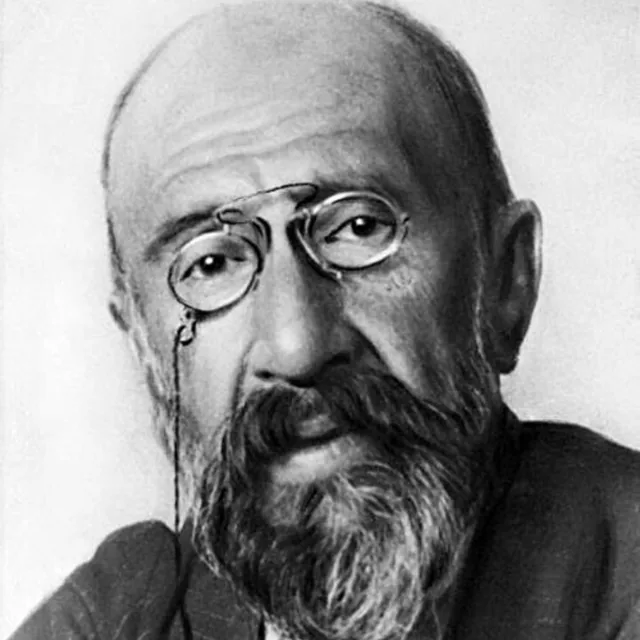
Osman Hamdi Bey is a royal polymath of the Ottoman Empire, and carries the honorific Bey as befits a man of high station and near ties to the palace and the caliph. He is cultivated in the older sense — one who moves easily between French, Turkish, and English at a single table — and of so diplomatic a temper that he is liked wherever he is known. At a certain dinner at Thymbra Farm he presided over an archaeological dig near Constantinople with an authority worn lightly enough to pass for mere approachability, thanking Gizem Faruki, Sidra al-Najjar, and Miray before the company and praising their labours despite their want of years at the work. It was there he let slip that the excavators might have uncovered a megaron — a civic hall of the ancients — and spoke of his hopes to open the further rooms and of how much might hang upon what they found.
The genial host vanished in an instant. At a sudden and violent report the Bey drew out a ciphered journal and set to writing in swift strokes, his whole face gathered in concentration, become of a sudden an observer rather than a guest; whilst the others crowded about a strange, colour-drained tree, he kept to his pages — the first hint that his interest in the affair ran deeper than patronage, and that he meant to keep a careful distance from its centre.
For Osman is no idle scholar but a man threaded through the politics of the Empire. He stands close to the Crown Prince Abd-ul Mejid, whom he greets with a formal embrace, and was charged with steadying the succession upon the death of the old caliph. He opened his house in Constantinople to the company, granting them both his hospitality and the liberty to see to their own affairs — and then confided that his journal had been stolen, and that a fog had been laid over his memory of its contents. Pressing upon them the urgency of its recovery, he set them the task on behalf of "A Certain Community" — which is to say the clandestine service of the Empire.
He is, besides, a man of books. A certain tome of his was drawn into negotiations of sale, marking him for a collector of rare and esoteric texts, and it was Jean-Zera Mongé who sought out a buyer for the volume taken from Osman — its language so obscure as to argue real scholarship, or ties to knowledge better left unnamed, behind it. As the agents of the Sublime Porte went about weighing the tome's worth with various interested parties, the Bey furnished them with resources and a letter of introduction to the Janissaries leader, Ahra "the Wolf" — one more proof of the reach he commanded in a city thrown into turmoil by the caliph's passing.
He attended, in due course, the coronation of Abd-ul Mejid at the Hagia Sophia, where the new sovereign received the Sword of Osman; uneasy for the safety of so great a gathering, the Bey proposed the party withdraw to a quieter table for brunch. His diplomacy showed again in conversation with Jean-Zera Mongé, to whom he gently corrected the common error that the Janissaries still stood — that old corps long since destroyed and supplanted by modern arms. He knew, too, Miray's disguise as "Miray" for what it was, and let the illusion stand unchallenged — a small mercy in the service of good order.
It is his particular gift to command a room without ever raising his voice: a gracious host whose invitations somehow cannot be declined, and whose lightest suggestion is generally acted upon. So it was that when he expressed his pleasure at meeting Jean-Zera again and confirmed the coming parade, the bard understood the courtesy for the gentle command it was. In such quiet arts lies the whole of the man's power, and much of his weight upon the events that follow.
Osman Hamdi Bey is bound up as well in the intrigues about the Ghost of March and the struggle over the Janissaries. He sent word to the Sublime Porte, marking himself a man with a stake in the Ghost's doings and their bearing upon the peace of the city. At a late-night debrief the agents of the Sublime Porte took stock of the Ghost's work at the Festival of Candles — among it the killing of Nazif, a perfumist in the Ghost's own service, whom the Ghost had relieved of his duties and replaced with men got up in the uniforms of the disbanded Sekban. It was Ahra "the Wolf" who summoned Osman Hamdi Bey to draw the Sublime Porte into the matter; and there the company learned that their errand, first the recovery of a journal, had grown to include the "unquiet dead" beneath the ruins of Saint Benoit Church — a charge the Bey passed to them, his own resources being tied up in the wake of the Ghost's mischief.
He is a scholarly man, this human gentleman, more often found amongst ancient texts and artifacts than not, and an authority upon old documents: it was he who pronounced a returned journal an expert forgery, and he who holds a cracked cipher by which its true pages might be read. His interest in the finds of the dig is at once professional and personal, touching his own heritage and his connexions amongst the noble houses; and he received the Sublime Porte warmly upon their return, acknowledging their success in the ruins and delighting in their discoveries.
Examining the returned journal after that exploration, Osman declared it a forgery outright, and revealed that the Ghost of March had asked for a meeting in the Undercity to hand over the true book. Wary of descending alone, he owned that he would far rather the Sublime Porte escort him or go in his stead, understanding the dangers well enough to prefer discretion to daring.
With the new Padishah crowned, the Bey's hand is felt in the affairs of the court. He is known for cultivating assets — indeed Aziz presented the trio as instruments of Osman's own making — and he keeps a library, which Jean-Zera Mongé visited in pursuit of the Hippodrome and its rigged races, though its master was absent that day. In a meeting with the Padishah and the Sultan, Aziz named Osman amidst talk of political manoeuvre, hinting at his sway over the new ruler's counsels; and the Sultan laid before the Sublime Porte a scroll bound up with the Bey's interests, a further token of his part in the machinations of the court.
Osman Hamdi Bey is the Loremaster of the Lodge of Byzantia, and keeps a manor of secret compartments and an artifact vault. His journal holds matters of no small weight — among them the whereabouts of the sister of the Padishah’s Consort, a diviner of great power — locked by mundane and arcane means alike, though he allowed that another road to its contents exists. In a letter to his friends he bequeaths that manor to them and confides his fear that some affair may yet break upon the Golden City, asking their help one last time. Folded within is a Black Queen Chess Piece set with a coiled serpent of metal — the key to the consort's sister — and his parting words turn upon a figure of chess, upon winning the game without needless sacrifice.
The Bey has himself been touched by a spell of forgetting, cast by Bergüzar; and he stood within a design concerning Hamit the Quartz of Damascus, upon whom the same working was meant to fall, to wipe away all memory of the Sublime Porte. His name appears again beside that memory-scroll, binding him to a wider conspiracy in the manipulation of men's minds.
And now, most lately, Osman has been killed, and there is talk amongst the company of avenging him. The letter and journal materials he left are carried still by the party, who passed them through the bars of a cell to a woman gowned in scarlet; she confirmed that Osman had come to her years before, and, having read his pages, affirmed that he had indeed set the company upon their present course — the decrypting of his journal and the finding of Mira.